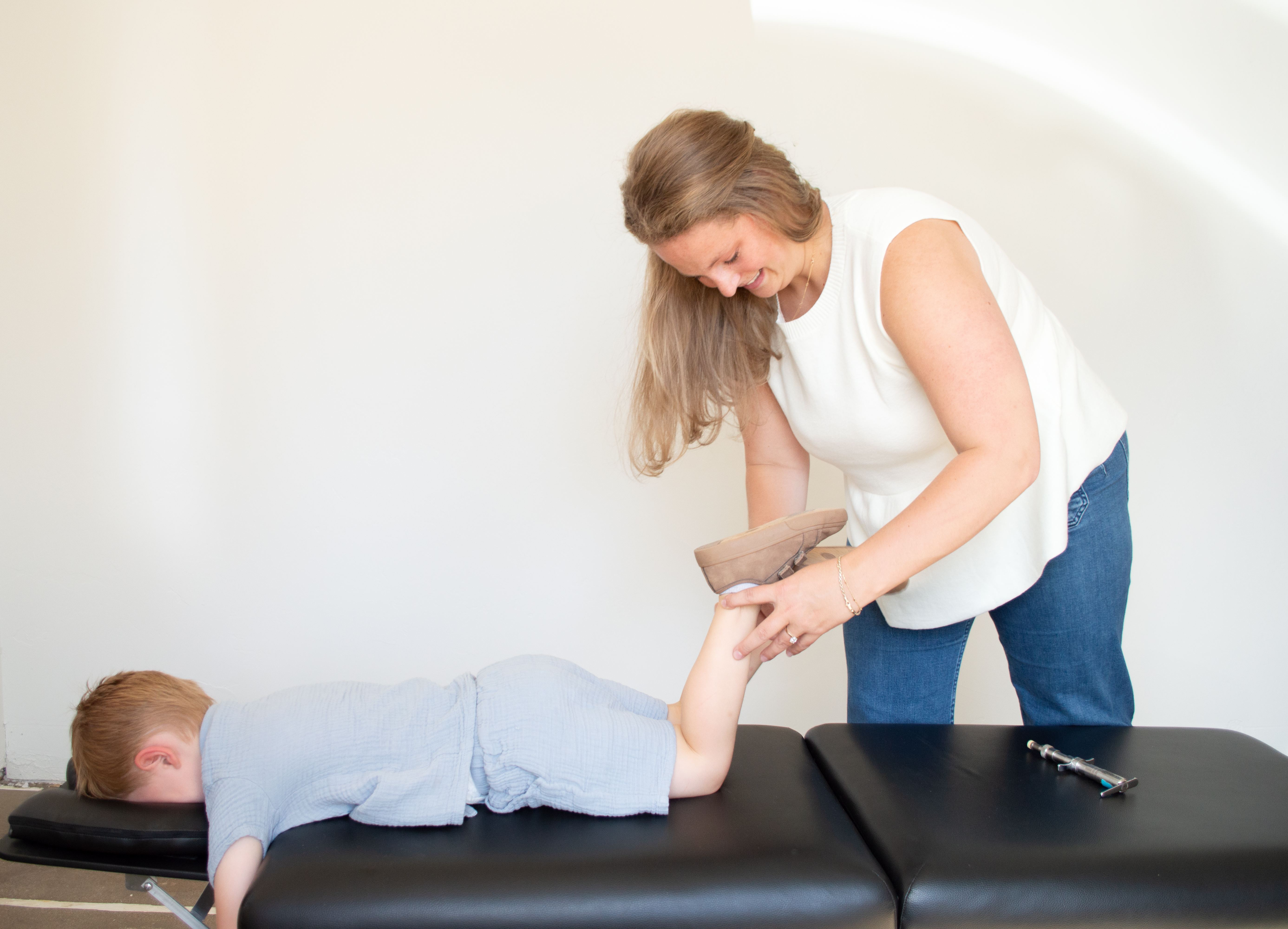
Gentle care for little bodies doing big work.
Wiggles, questions, shy days, and big personalities welcome.
Every child is different. Some walk in curious and ready. Some need a few minutes — or a few visits — to feel comfortable. Some have opinions, a lot of questions, and a very specific idea of how things should go. However your child shows up that day, there’s no wrong way to arrive at Sundays.
Come as you are, be as you are. All kids welcome here.
Book Your Child’s First VisitSo much is happening in that little body.
The first year of life involves an extraordinary amount of change. As baby learns to feed, turn, reach, roll, sit, crawl, and explore, their nervous system and musculoskeletal system are developing and adapting in real time. That constant change is beautiful — and sometimes it shows up as something a parent can’t quite put their finger on.
Families come to Sundays while navigating questions or concerns around:
- Reflux + digestive discomfort
- Sleep
- Breastfeeding + feeding challenges
- Developmental milestones
- Latching or feeding-related tension
- General nervous-system development + regulation
- Torticollis or a preference for turning the head one direction
- Body tension + comfort after birth
- Tongue ties, including support surrounding a tongue-tie revision
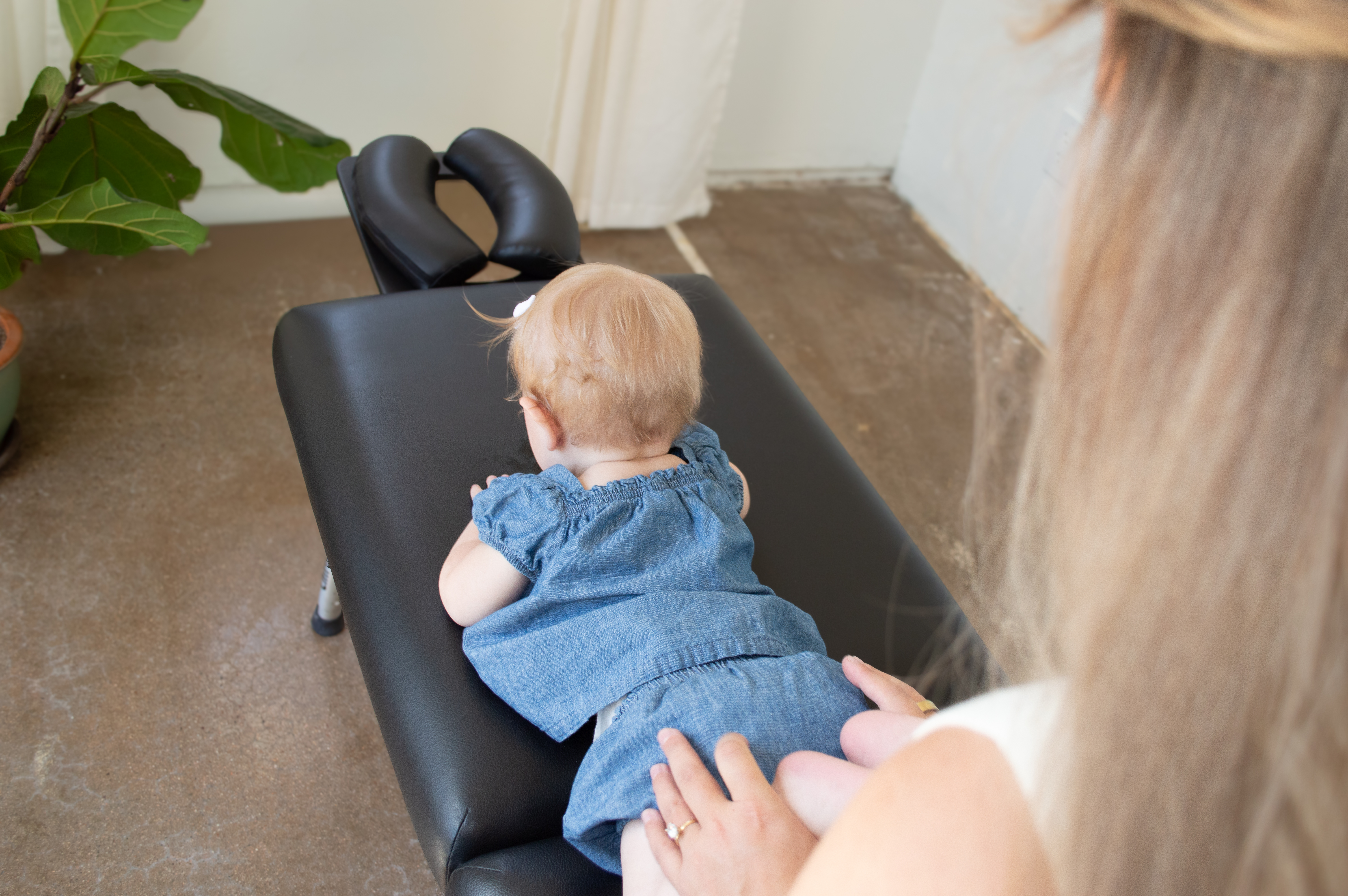
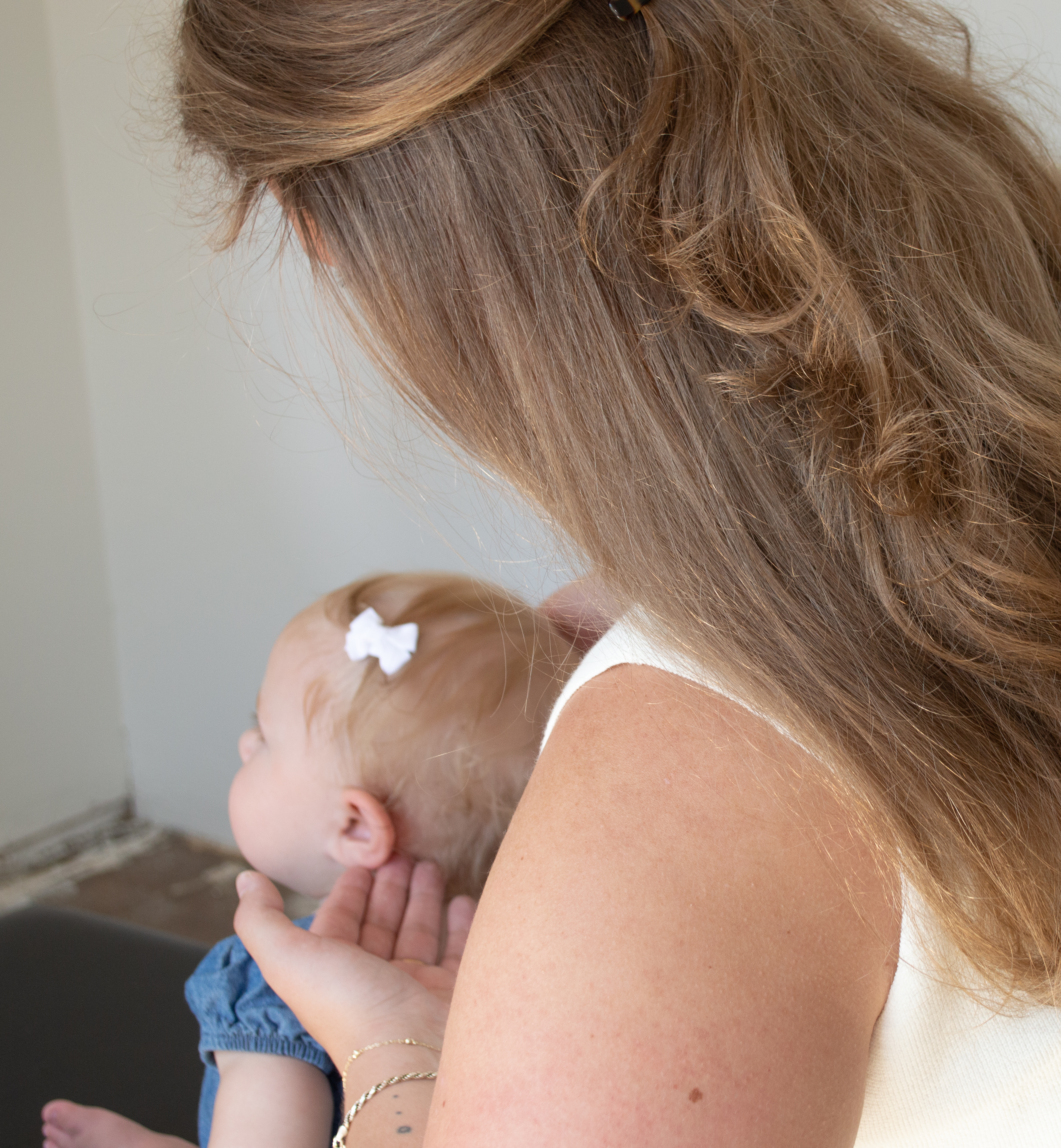
For the climbing, tumbling, figuring-it-all-out years.
Toddlers throw themselves into everything — that’s kind of the job description. Big feelings, wobbly landings, new foods, sleep that’s never quite predictable, and more opinions than you were expecting. Their bodies are developing fast, and their nervous systems are working hard to keep up with all of it.
Families come to Sundays while navigating questions or concerns around:
- Bumps, falls + tumbles
- Big feelings + nervous-system regulation
- Movement + mobility
- Developmental milestones
- Body tension
- Immune-system concerns
- Sleep challenges
- Allergies
- Digestion
- Eczema + skin concerns
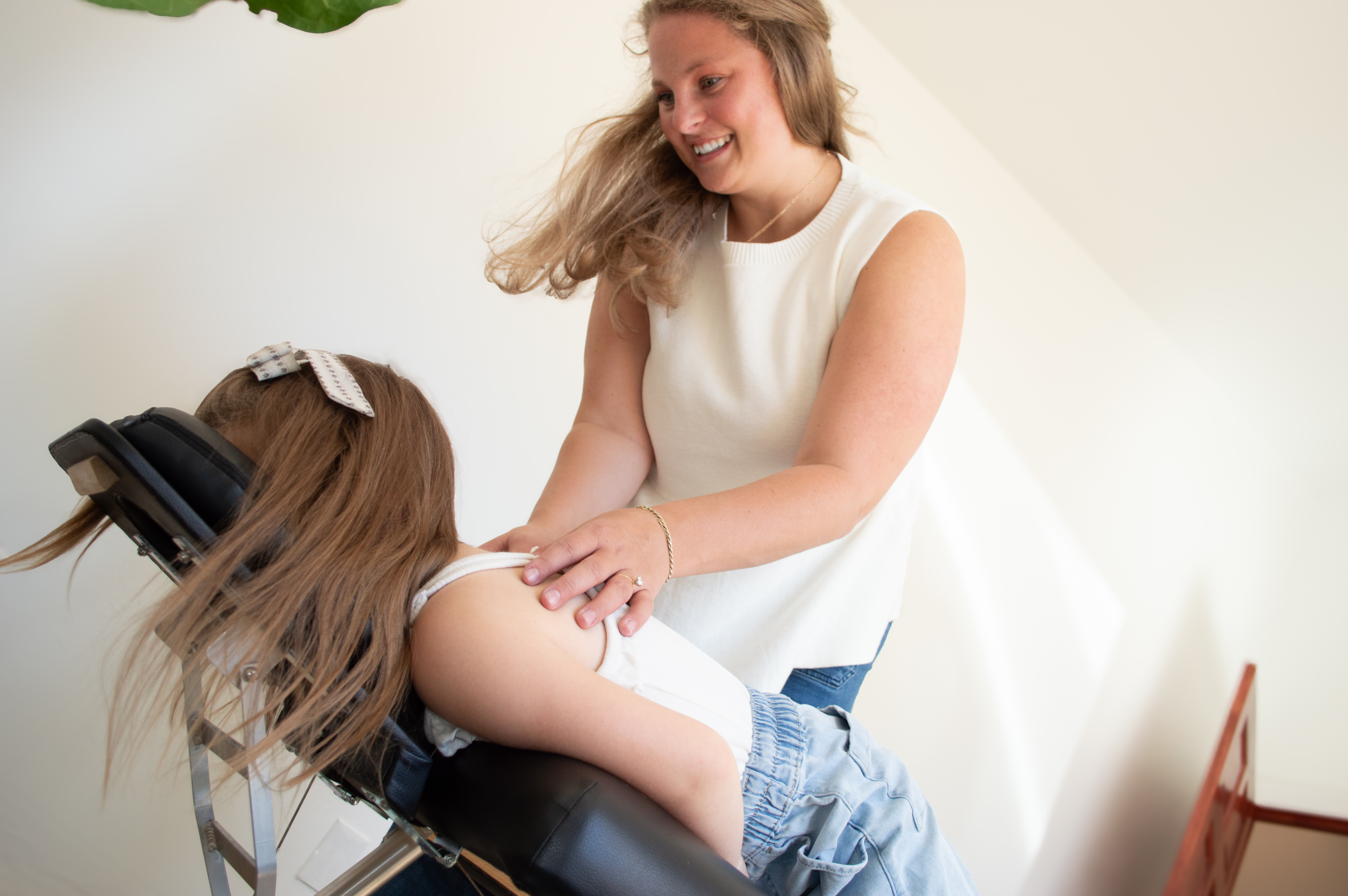
Bigger kids can carry bigger stress, too.
As children get older, their world expands. School, sports, backpacks, screens, growth spurts, friendships, activities, changing routines, and bigger emotions all become part of the picture — and their developing bodies and nervous systems are carrying more than they sometimes show.
Families come to Sundays while navigating questions or concerns around:
- Posture + movement
- Focus + attention
- Sports, activity + growing bodies
- Hyperactivity
- Growth-related tension
- Big emotions + emotional regulation
- Digestion
- Bladder control + bedwetting
- Sleep
- Nervous-system regulation
- Allergies
- General wellness
Their brain and body are learning from each other all day long.
Your child’s nervous system is the communication network between their brain and body — involved in how they take in information, respond to their environment, coordinate movement, and adapt as they grow. It’s working constantly in the background, even when nothing looks obviously wrong.
Dr. Keeley takes a neurologically based approach to pediatric care. Rather than looking only at whether something hurts, she considers the bigger picture of how the nervous system is functioning — and what that might be quietly shaping in your child’s everyday experience.
We don’t guess when it comes to your child’s care.
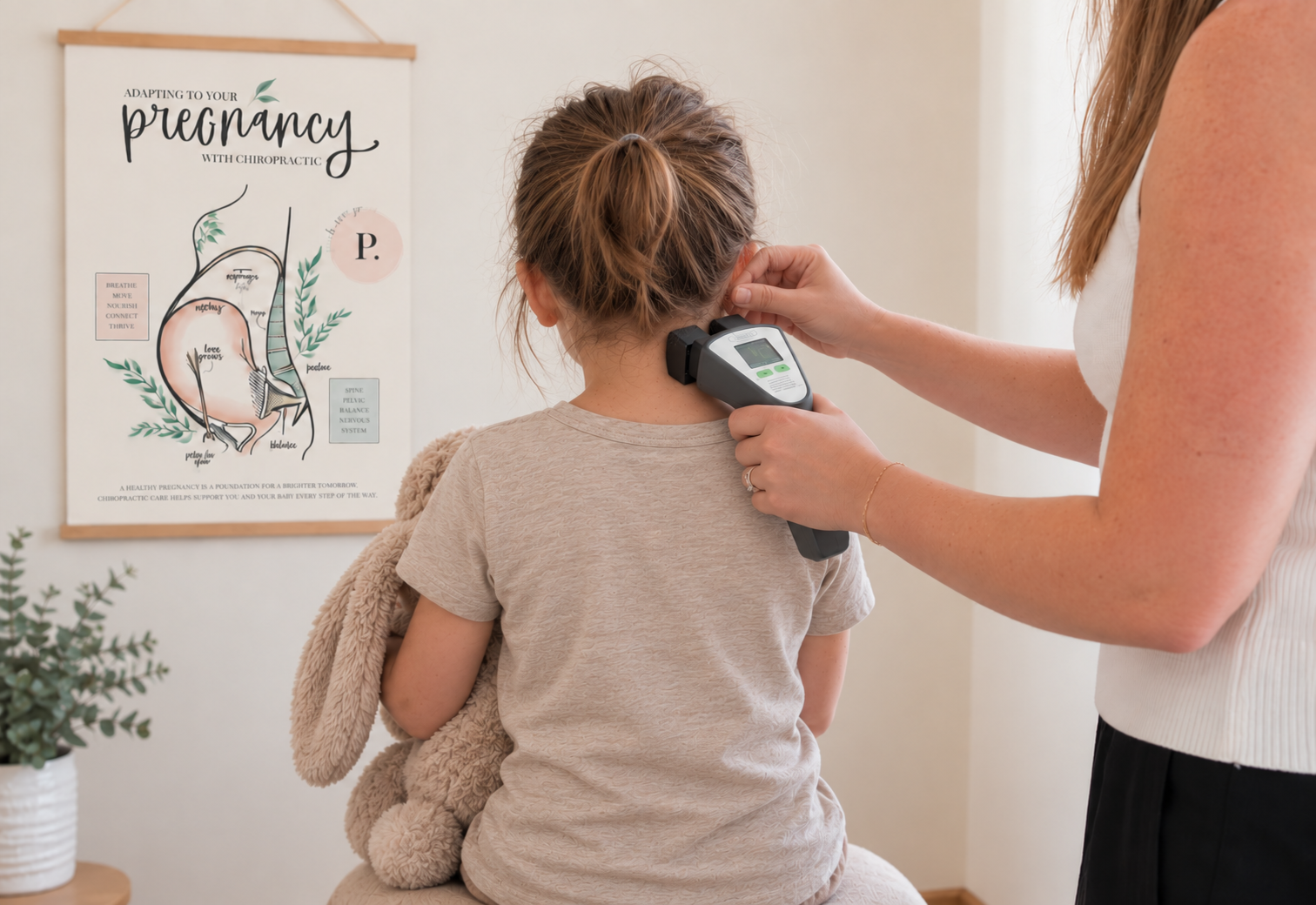
As part of her evaluation process, Dr. Keeley uses INSiGHT CLA nervous system technology. These gentle, non-invasive scans provide objective information about how the nervous system is adapting and functioning — information she considers alongside your child’s health history, what you’ve been noticing at home, and her evaluation.
The goal is to have more to work with — so care is built around your child specifically, rather than based on assumptions or symptoms alone.
More information. Less guessing.
Care built around the child in front of her.
A few things parents usually want to know.
Yes — in almost every way. The techniques Dr. Keeley uses with a newborn look completely different from what she uses with a six-year-old, and different again from adult care. Pressure is adapted to each child’s age, size, and stage. For infants, it’s extremely light — often described as the kind of gentle, sustained contact that allows the nervous system to respond without any force. For older children, care still looks different than you might expect from traditional chiropractic. Dr. Keeley always explains what she’s doing, checks in as she goes, and adjusts her approach based on how each child responds.
The first visit starts with a conversation. Dr. Keeley takes time to hear about what brought you in — your child’s history, what you’ve been noticing, any questions you’ve been carrying. From there, she completes an age-appropriate evaluation and, for most families, an INSiGHT CLA nervous system scan. The scans are non-invasive and give her objective information to work alongside everything else she’s observing. She’ll share what she found and talk through what care could look like for your child specifically — no pressure, and no assumptions.
No. While some families come to Sundays because their child is clearly uncomfortable, many come during periods that look perfectly ordinary from the outside — navigating a developmental milestone, supporting recovery after a tongue-tie revision, wondering about sleep or digestion, or simply wanting to be proactive about their child’s nervous system health. There’s no minimum threshold of discomfort required. If you’ve been curious about whether care might be worth exploring, the first visit is a good place to start.
That’s completely okay. Your child can stay close to you, watch first, ask questions, take time to warm up, or simply need Mom nearby. You’re welcome to stay with your child throughout their appointment and be part of the process. Dr. Keeley will explain what she’s doing, answer your questions, and let care move at your child’s pace. There’s no expectation that they need to be perfectly still, immediately comfortable, or ready to participate the moment they walk through the door.
Every child is different, which is why Dr. Keeley looks at the whole picture rather than expecting one specific sign of progress. Parents may notice changes in everyday patterns like digestion, sleep, how quickly their child settles after big feelings, the frequency or intensity of meltdowns, movement, comfort, or other things they originally came in concerned about.
Dr. Keeley also uses your child’s history, what you’re noticing at home, her evaluation, and objective information from their INSiGHT CLA nervous system scans to follow changes over time. The goal is to have more information to work from, rather than simply guessing based on how your child seems that day.
Wondering if Sundays feels like the right fit for your family?
Your child’s first visit starts with a real conversation. Dr. Keeley takes time to hear about what you’ve been noticing, learn about their history and development, complete an age-appropriate evaluation, and talk through what care could look like — without pressure, and without assumptions.
Book Your Child’s First Visit